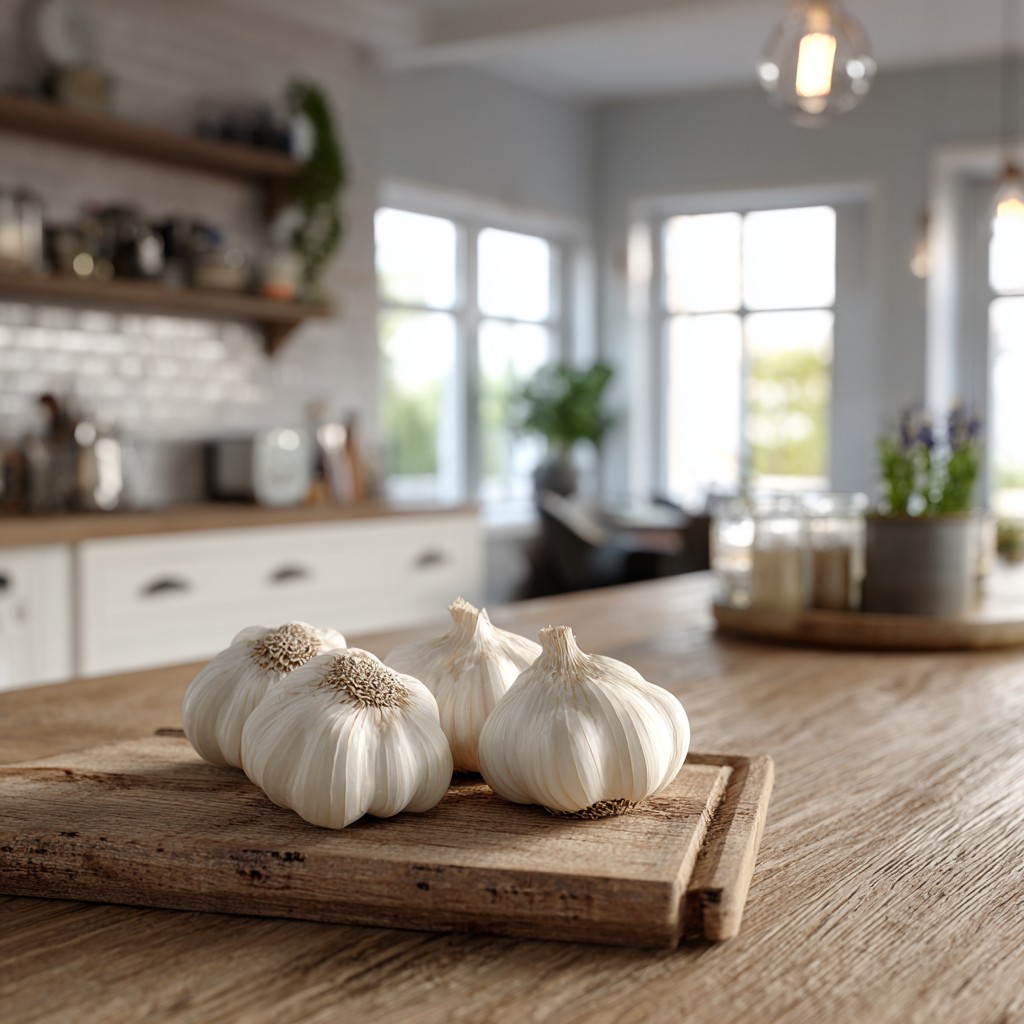
There is a particular kind of cook who claims garlic is their love language. The sort of person who doubles every recipe’s suggested quantity as a matter of principle, who regards the instruction “two cloves” as a charming suggestion rather than a genuine measurement. If you are reading this, there is a reasonable chance you are that person – or you live with one. Either way, you already know the problem. The cooking is magnificent. The aftermath is considerably less so.
Garlic smell is one of the great stubborn mysteries of kitchen life. You wash your hands. You wash them again. You use soap. You use more soap. And yet somehow, several hours later, there it is – that unmistakable sharp, sulphurous warmth clinging to your fingers like it has signed a long-term lease. The good news is that this is a chemistry problem, and chemistry problems have chemistry solutions. Once you understand why garlic behaves the way it does, every method in this article will make immediate, satisfying sense.
Why Garlic Smells So Stubbornly in the First Place
A Brief, Fascinating Word About Allicin
When garlic sits undisturbed in its papery skin, it is actually fairly inoffensive. The smell – that full, pungent intensity – is only released when the clove is cut, crushed, or otherwise damaged. At that point, an enzyme called alliinase comes into contact with a compound called alliin, and the two react to produce allicin. Allicin is responsible for both garlic’s extraordinary flavour and its extraordinary staying power on every surface it touches.
Here is the crucial detail that explains why so many people’s instinctive response – rinsing under the tap – does precisely nothing useful. Allicin is oil-soluble, not water-soluble. Water simply runs over the top of it. You might as well be rinsing your hands with good intentions. Everything that follows in this article works because it either breaks down allicin chemically, binds to it and carries it away, or both. Keep that principle in mind and the methods stop feeling like folk remedies and start feeling like actual science.
Removing Garlic Smell from Your Hands
The Methods That Actually Work (Ranked)
Starting with the most elegant solution first: rub your hands on stainless steel under cold running water for thirty seconds. This sounds like something a slightly eccentric chef once told you and you never quite believed, but it is entirely legitimate. Stainless steel contains chromium, which binds to the sulphur compounds in allicin and draws them away from the skin. This is why every professional kitchen ever built has a stainless steel sink, and why experienced cooks will run their hands along the sink’s inner surface as casually as the rest of us reach for the soap. If you do not have a dedicated stainless steel soap bar (they exist, they are inexpensive, and they are worth owning), the sink itself works perfectly well.
When you need to follow up with something more thorough – or when the garlic has been particularly enthusiastic – a salt-and-washing-up-liquid scrub is the next move. The salt provides gentle mechanical exfoliation that lifts allicin compounds from the surface of the skin, while the surfactants in washing-up liquid do what regular hand soap cannot: they emulsify oil-soluble compounds and allow water to rinse them away. Scrub for a minute, rinse with cold water rather than hot (hot water opens pores and can actually drive the smell in deeper), and assess.
Lemon juice and white vinegar both work on the same principle – their acidity breaks down allicin. Rub either onto your hands, leave for thirty seconds, then rinse. They are effective and readily available, though if you have a small cut on your hands you will absolutely know about it. Bicarbonate of soda mixed with a little water into a paste is a gentler alternative that neutralises odour compounds rather than breaking them down. Toothpaste – particularly a plain, non-gel variety – is a reasonable emergency option when you are not in your own kitchen, since it combines mild abrasion with odour-neutralising compounds.
Chopping Boards – Wood, Plastic, and the Great Debate
Getting Garlic Out of a Board That Has Absorbed Everything
Chopping boards are where garlic smell takes up permanent residence if you let it, and the approach depends entirely on what your board is made from.
Plastic boards are non-porous, which means allicin compounds sit on the surface rather than penetrating the material. A thorough scrub with hot water and washing-up liquid removes most of it. For anything that lingers, make a paste of bicarbonate of soda and a small amount of water, spread it across the board, and leave it to dwell for ten to fifteen minutes before scrubbing and rinsing. Job done.
Wooden boards are a different matter entirely, and a more interesting one. Wood is porous. It absorbs allicin compounds into the grain, which is exactly what gives a well-used wooden board its rich, complex smell – and exactly what makes deodorising it a slightly more involved process. The method that works best is satisfyingly old-fashioned: scatter a generous layer of coarse salt across the board, take half a lemon, and use it as a scrubbing tool – cut side down, working the salt into the grain. The salt provides mechanical abrasion, the lemon’s citric acid breaks down allicin, and the combination draws the smell up and out. Follow with a wipe-down using undiluted white vinegar, then rinse quickly and – this part is not optional – dry the board immediately and thoroughly.
A wet wooden board is a board that retains smells. Always dry yours standing upright so air can circulate on both sides. And for anyone on the fence about wooden versus plastic: wooden boards are more pleasant to use, kinder to knife edges, and – when properly maintained – no less hygienic than plastic. The extra thirty seconds of care is a fair trade.
Knives, Graters, and the Small Utensils That Hide It Well
The Bits Most People Forget to Treat Properly
The knife blade gets washed. It is the bolster – the thick junction where the blade meets the handle – where garlic compounds collect and are forgotten. Same principle applies to the grater’s fine side, the pestle’s rough inner bowl, and most notoriously of all, the garlic press.
A garlic press is a small device with an outsized ability to smell persistent. The mesh of tiny holes traps garlic pulp efficiently, and ordinary washing often clears the visible residue while leaving behind enough allicin to make the utensil drawer smell like a Mediterranean kitchen by Tuesday. The solution is a ten-minute soak in a bowl of warm water mixed with white vinegar, followed by a scrub with an old toothbrush to work into the mesh. For the pestle and mortar – particularly a porous stone variety – a salt scrub using the pestle itself to grind it around the bowl works extremely well.
One rule that applies to all metal utensils: rinse with cold water before washing, not hot. Hot water can set volatile odour compounds into metal surfaces before the soap has a chance to do its work. Cold first, then hot wash, then proper drying.
Kitchen Surfaces and the Air Itself
When the Whole Room Smells Like a Trattoria
Sealed stone and laminate worktops respond well to a white vinegar wipe-down – diluted to roughly one part vinegar to two parts water for regular use, neat for more determined cases. Solid wood surfaces should be treated as you would a wooden chopping board: salt scrub, vinegar, quick rinse, dry promptly.
The microwave is frequently overlooked but is a notorious garlic smell trap if you have ever heated anything garlic-adjacent inside it. Place a bowl of water with several slices of lemon inside and run it on high for three minutes. The steam loosens any residue from the walls and the lemon begins neutralising the odour. Wipe down immediately while everything is still warm.
As for the air itself – garlic smell settles into curtains, cushion covers, and soft furnishings with a tenacity that no estate agent in London has ever thought to mention in a viewing. Ventilation during cooking is the obvious first line of defence, but for odour that has already taken hold, a bowl of white vinegar left on the counter overnight absorbs airborne compounds remarkably effectively. Simmering a pan of water with lemon slices, cinnamon, and a few cloves for twenty minutes acts as a natural air freshener that does actual deodorising work rather than simply masking one smell with another.
Fabrics, Soft Furnishings, and the Clothes You Were Wearing
When Garlic Decides to Stay for Dinner and Breakfast
Tea towels and oven gloves should go into the wash with a cup of bicarbonate of soda added to the drum alongside your usual detergent. White vinegar used in place of fabric conditioner is extraordinarily effective at breaking down odour compounds in fabric – it sounds counterintuitive, but the vinegar smell dissipates entirely as the clothes dry, taking the garlic with it.
The cardinal rule for garlic-affected laundry: do not tumble-dry until you are certain the smell has gone. Heat sets odours into fabric fibres permanently, and a garlic-scented jumper that has been through the tumble dryer is a garlic-scented jumper you will own for ever. Air-dry first, assess, wash again if necessary, then dry.
For sofas, cushions, and upholstery, bicarbonate of soda is your best tool. Sprinkle it generously across the affected surface, leave it for several hours – overnight if the smell is significant – then vacuum thoroughly. Dry-clean-only garments that have absorbed cooking smells should be taken in sooner rather than later; the longer allicin compounds have to bond with fabric fibres, the less cooperative they become.
Getting Ahead of the Smell – Prevention Worth Knowing About
Small Habits That Make the Aftermath Far Easier
Keep a small dedicated chopping mat reserved exclusively for garlic and onions. It will take the brunt of the allicin, it can be washed aggressively without guilt, and it protects both your main board and your composure. A small bowl of coarse salt beside the sink makes a mid-cooking hand-rub effortless and instinctive. Treat hands and boards immediately after prepping the garlic rather than waiting until after dinner – allicin compounds bond more stubbornly to surfaces the longer they are left.
Kitchen gloves when processing serious quantities are entirely sensible and not remotely an admission of defeat.
Garlic is not the enemy. It is one of the finest ingredients that has ever existed, and any recipe that contains it is almost certainly improved for the fact. It simply requires a small amount of management – a brief negotiation between the pleasure of cooking and the practicalities of living alongside other people afterwards. Armed with the right methods and the mild acids already sitting in your kitchen cupboards, that negotiation is very much one you can win.